
Gardening Tips, Guides
Top Pepper Companion Plants: Boost Yield & Save Space
Apr
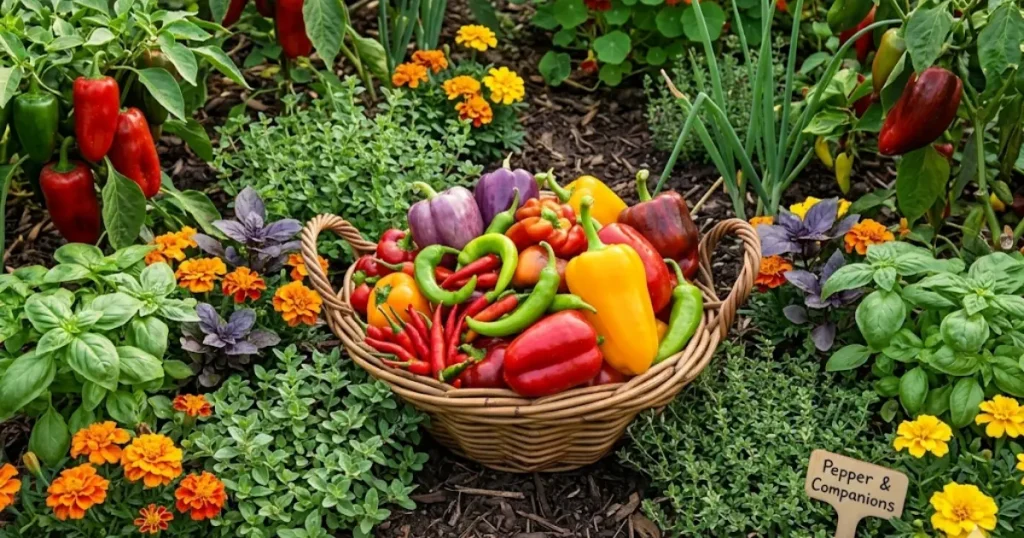
Peppers are easily one of my absolute favorite things to grow in my kitchen garden, but that doesn’t mean I want a raised bed filled with nothing but peppers. Planting like that is a bit of a gamble; you’re essentially staking the success of your entire growing season on just one type of plant. It also means your harvest basket is sitting over there collecting dust while you wait weeks for those first peppers to ripen.
What you want to do instead is fill in the ‘blank’ spaces around your peppers with a strategic mix of herbs, flowers, and smaller veggies. The best pepper companions are the ones that do the heavy lifting for you, either by repelling nasty pests or by attracting the ‘good guys’ to prey on them. These partners need to love the same warm season as your peppers and not mind a little shade once those pepper plants start to bush out.
Let’s dive into the world of pepper companion planting and show you how to maximize every inch of your garden.
In the United States, home gardening has shifted toward organic practices. We want fewer chemicals and more biodiversity. Peppers (Capsicum annuum) are heavy feeders and love the sun, but they can be a bit sensitive.
When you use companion planting, you are practicing Integrated Pest Management (IPM). Instead of spraying pesticides, you plant a “trap crop” like Nasturtiums to lure bugs away. You also improve soil health. Some plants act as a “living mulch,” covering the ground to keep moisture in the soil, which is a lifesaver during those hot July weeks.
You may like:
- How to Grow Jalapeño Peppers From Seeds: A Step-by-Step Guide
- Top 12 Best Types of Peppers to Grow in Your Garden: Easy and High Yield
The Best Pepper Companion Plants for Pest Control
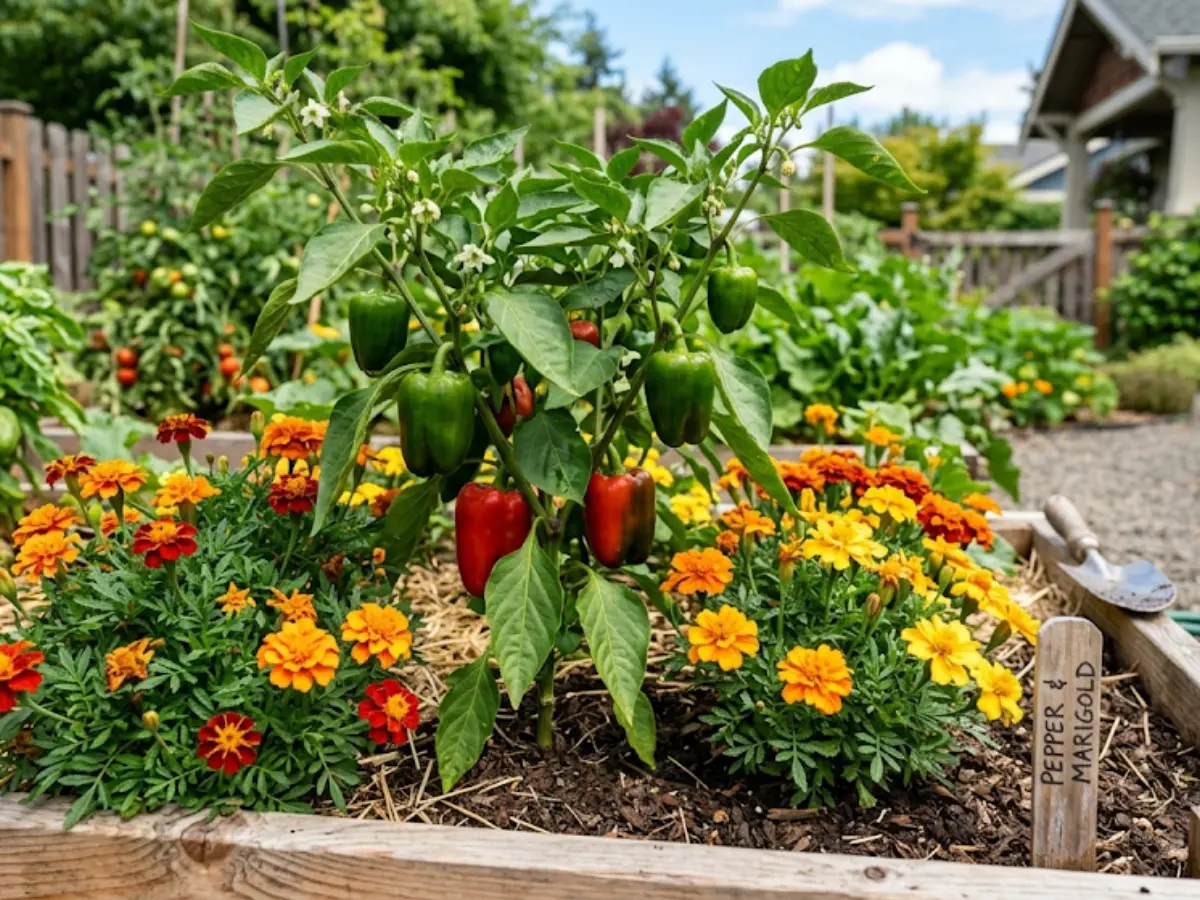
Flowers are not just for decoration. In a pepper patch, they are your frontline security detail.
1. Marigolds
If you walk into any successful organic farm in California or Vermont, you will see French Marigolds everywhere. Why? Because they produce a scent that confuses flying pests. More importantly, their roots release a chemical that kills root-knot nematodes in the soil. If you want your peppers to stay healthy from the roots up, tuck a few Marigolds between your plants.
2. Nasturtiums
Think of Nasturtiums as a sacrificial lamb. Aphids love them even more than they love your bell peppers. By planting Nasturtiums nearby, the aphids will swarm the flowers instead of your pepper leaves. Plus, the flowers are edible and add a peppery kick to your summer salads.
3. Petunias
Petunias are surprisingly hardy. They help repel asparagus beetles, leafhoppers, and tomato hornworms (which, despite the name, love peppers too). They fill in the gaps at the base of your pepper plants beautifully, making sure no inch of soil is wasted.
Top Herbs to Enhance Pepper Flavor and Health
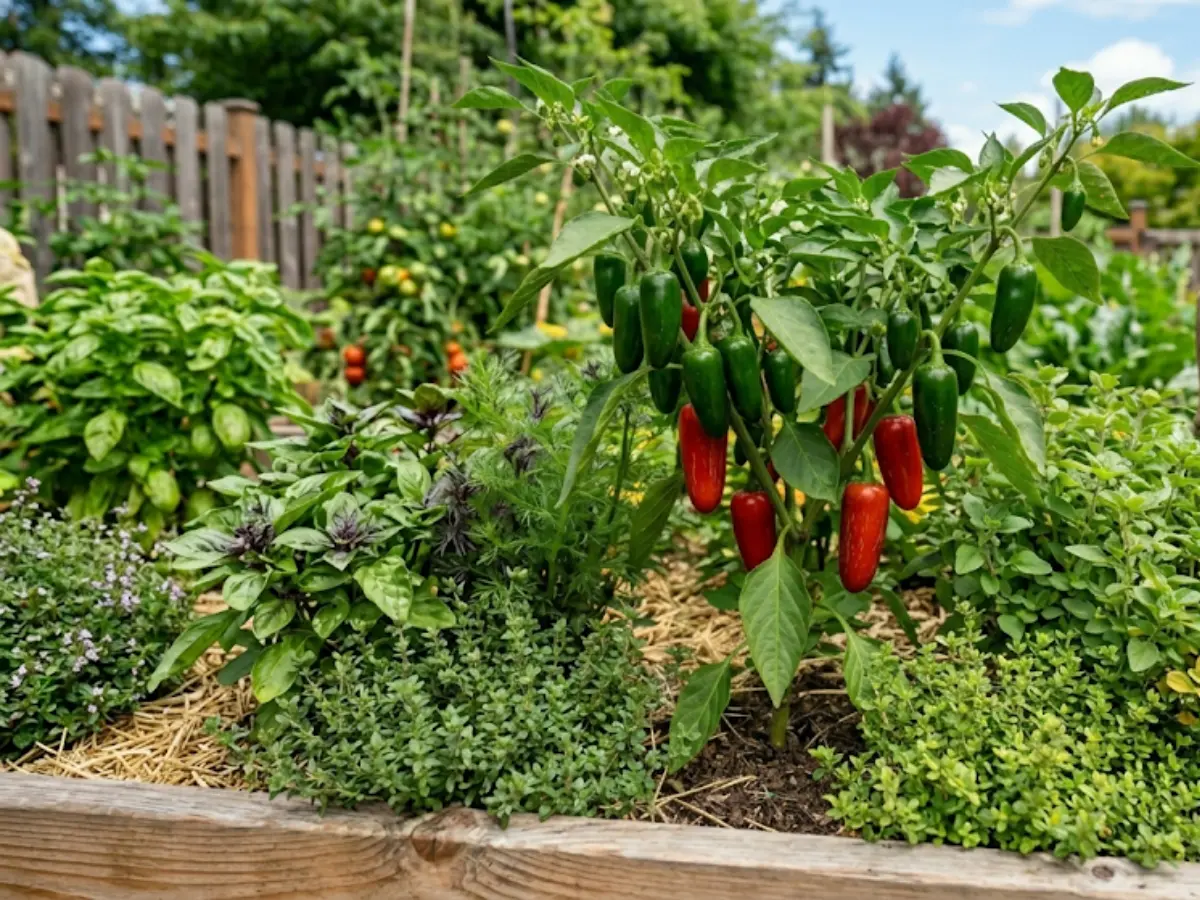
Herbs are the “secret sauce” of garden planning. They take up very little room but offer massive benefits.
1. Basil
There is an old gardening rule: “What grows together, goes together on the plate.” Basil and peppers are best friends. Basil helps repel thrips, flies, and mosquitoes. Many gardeners, including myself, swear that planting Basil right next to sweet peppers actually improves the flavor of the fruit.
2. Oregano and Parsley
Oregano and Parsley are low-growing herbs that are excellent for ground cover. They provide a home for beneficial insects like hoverflies, which eat aphids. Because they don’t grow tall, they won’t compete with your peppers for sunlight.
3. Rosemary and Thyme
These woody herbs have very strong scents. This helps “mask” the smell of your peppers so that pests have a harder time finding them. Just be careful with Rosemary in a raised bed, as it can grow quite large; keep it pruned or in a corner.
Vegetable Companions for Maximum Space Efficiency
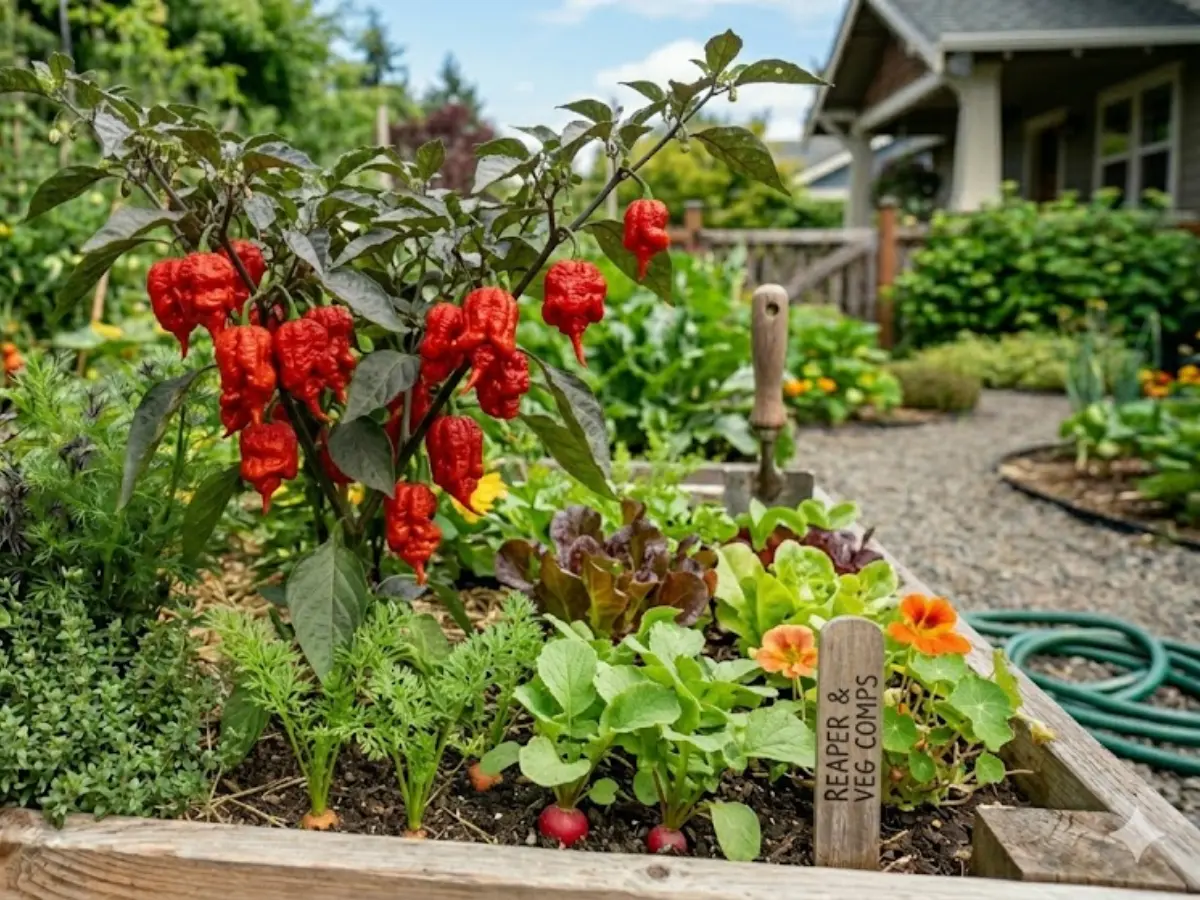
1. Alliums (Onions, Garlic, Chives)
Onions and Garlic are fantastic because they don’t take up much leafy space above ground. Their pungent smell is a natural deterrent for aphids and beetles. You can plant them in the narrow spaces between your pepper rows.
2. Carrots and Radishes
Peppers have relatively shallow roots. Carrots grow deep, which helps break up the soil and allows oxygen to reach the pepper roots. Radishes are great because they grow fast. You can harvest your radishes before the pepper plants even get big enough to shade them out.
3. Spinach and Lettuce
Peppers love the sun, but the soil underneath them hates it. Planting Lettuce or Spinach around the base of your peppers creates a “living mulch.” These leafy greens shade the soil, keeping it cool and moist, while the pepper plants provide them with a little bit of afternoon shade when the heat gets intense.
What NOT to Plant Near Peppers (Incompatible Neighbors)
Not everyone in the garden gets along. Avoid these pairings to keep your plants from fighting.
-
Fennel: Most gardeners call Fennel the “bully.” It releases chemicals that can inhibit the growth of almost any plant nearby, especially peppers. Give Fennel its own pot far away.
-
The Brassica Family: Broccoli, Cabbage, and Brussels Sprouts are heavy feeders. They will win the battle for nutrients, leaving your peppers stunted and yellow.
-
Apricots: This is a weird one, but a common fungus that affects apricot trees can easily jump to pepper plants. If you have an orchard, keep your vegetable garden at a distance.
Tips for Planning Your Pepper Companion Garden
When you start your garden planning this spring, keep these three things in mind:
-
Sunlight is King: Peppers need at least 6 to 8 hours of direct sun. Don’t plant tall companions (like Corn or Pole Beans) on the south side of your peppers, or you will shade them out.
-
Airflow: Even though we want to maximize space, don’t pack them so tight that air can’t move. Poor airflow leads to fungal issues and root rot.
-
The Container Option: If you only have a balcony, you can still do this! A large 5-gallon pot can hold one Jalapeno plant, a Basil plant, and a few Marigolds. It’s a mini-ecosystem in a single pot.
Frequently Asked Questions (FAQs)
Can I plant tomatoes and peppers together?
Yes, they are in the same family and enjoy the same soil conditions. Just be careful with spacing because they both catch the same diseases. If one gets blight, the other likely will too.
What is the best flower for hot peppers?
Marigolds are the gold standard. They work for Habaneros, Ghost peppers, and Jalapenos alike by protecting the root system and deterring pests.
Do peppers need a lot of space when companion planting?
Not necessarily. You can plant them closer if you use “intercropping” (planting small things like radishes between big things). Just ensure the “main” pepper plants are about 18 inches apart.
How many basil plants per pepper plant?
A good rule of thumb is two Basil plants for every one pepper plant. This provides enough scent to deter pests without crowding the pepper’s root zone.
Conclusion
Maximizing your garden space isn’t just about fitting more plants in; it’s about fitting the right plants together. By pairing your peppers with Basil, Marigolds, and Alliums, you are creating a garden that works for you. You will spend less time weeding and spraying, and more time enjoying a massive harvest of crisp, flavorful peppers.
Ready to get started? Grab some Basil seeds and a few Marigold starts this weekend. Your peppers will thank you! For more tips on organic gardening and soil health, check out our other guides on raised bed maintenance and natural composting.
Read more: