
Persimmon Tree Live Plant – 6-12 Inches Tall, Quart Pot, Outdoor, Zones 7-10
$29.98
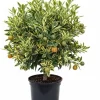
Cultivate your own fruit with this persimmon tree live plant. Measuring 6 to 12 inches tall and arriving in a quart pot, it’s perfect for outdoor gardens. This young American persimmon tree is dormant in winter and thrives in USDA Zones 7-10, offering an easy start to growing delicious, sweet fruit.
Shipping and Return policies:
We stand behind our plants with our Alive & Thrive Guarantee. If you experience any issues within the first 30 days, please email us, and our team will be happy to help. When needed, we’ll send you a one-time replacement free of charge to make sure your garden keeps growing strong.

Reasonable Price
We offer reasonable price

Support 24/7
Contact us 24 hrs a day
100% Money Back
You’ve 30 days to Return
Payment Secure
100% secure payment
Overview
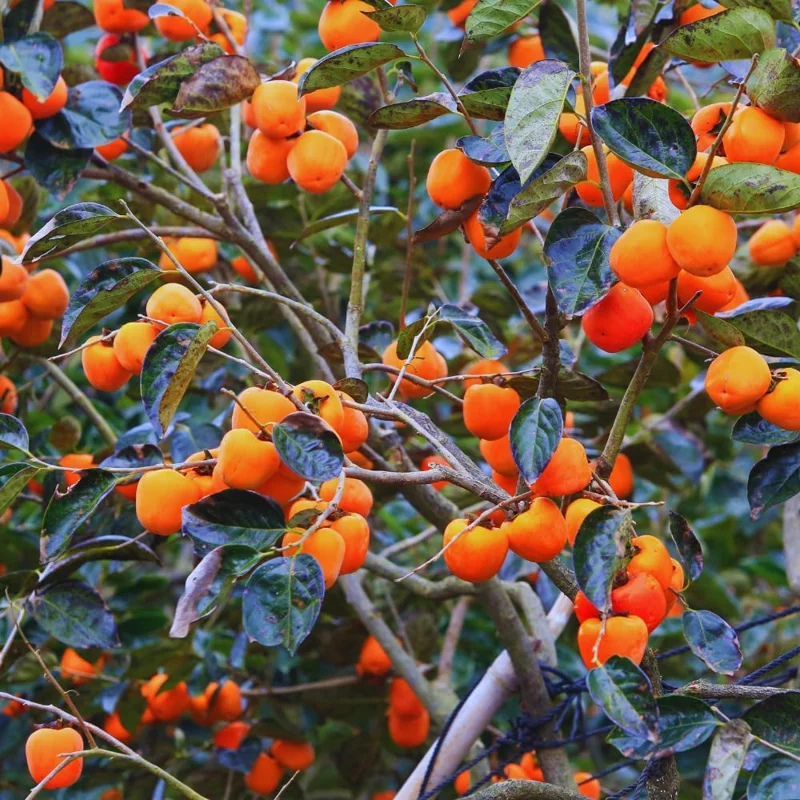
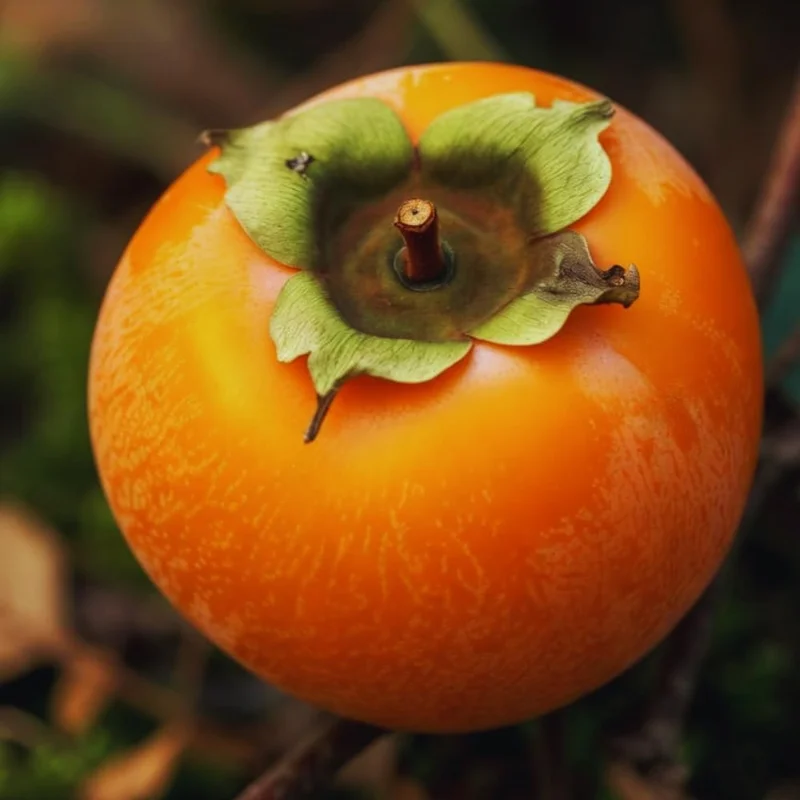
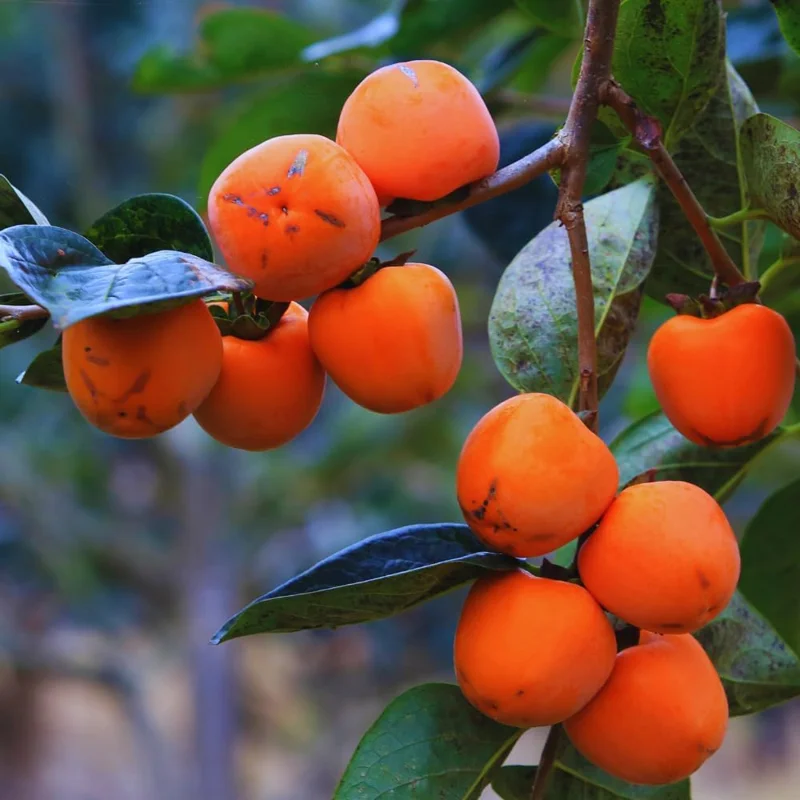
Bring the joy of home-grown fruit to your garden with this vibrant persimmon tree live plant. Known for its sweet, succulent fruit and attractive foliage, the persimmon tree (Diospyros virginiana) makes a wonderful addition to any landscape. This offering is for a young, vigorous live plant, carefully cultivated to ensure a strong start in your garden. Standing approximately 6 to 12 inches tall, it arrives in a convenient quart-sized pot, ready for transplanting. During the winter months, this deciduous tree enters a natural dormant state, which is crucial for its healthy development and future fruit production. Planting a persimmon tree live plant allows you to enjoy the entire growth cycle, from its delicate spring blossoms to the rich, autumnal harvest.
The persimmon tree is a resilient and rewarding choice for gardeners in suitable climates. Its distinctive growth habit and seasonal changes create visual interest throughout the year. As it matures, this tree will not only provide a bounty of delicious fruit but also serve as a beautiful focal point in your outdoor space. Whether you’re an experienced horticulturist or a budding gardener, introducing an American persimmon tree to your collection is a delightful endeavor that promises many years of enjoyment and fresh, homegrown goodness.
Key Benefits
Choosing to plant a persimmon tree live plant offers a multitude of advantages for both your garden and your palate. These trees are not only productive but also visually appealing, enhancing the beauty of your outdoor environment.
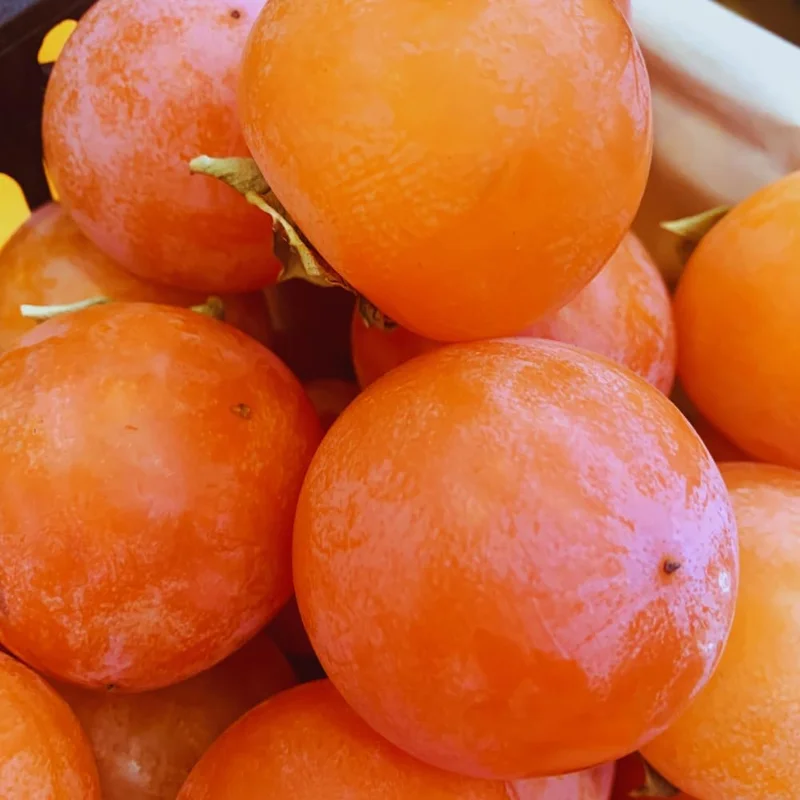
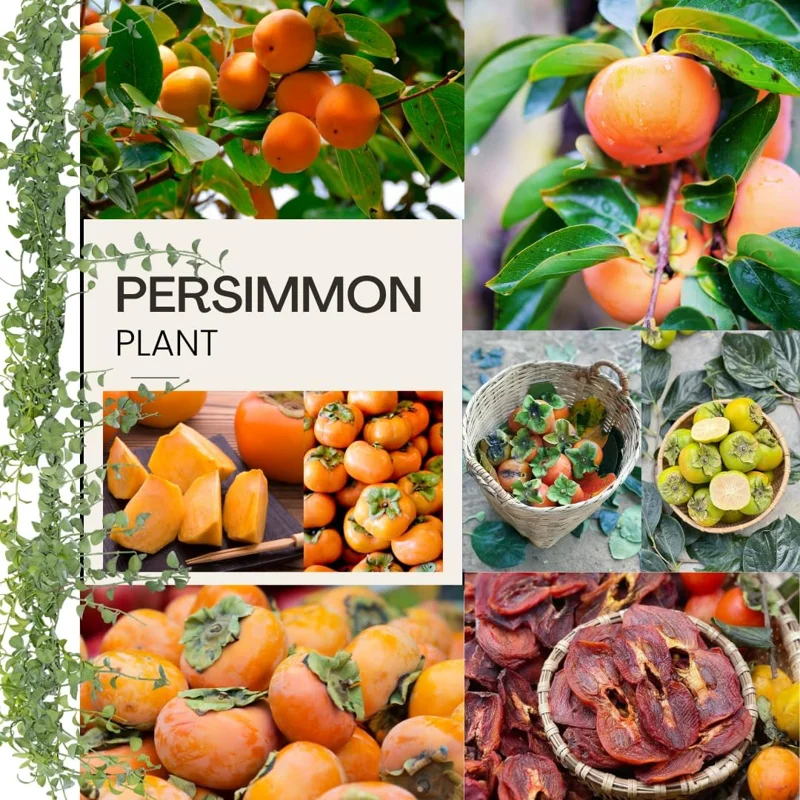
- Delicious Fruit Production: Enjoy fresh, sweet persimmons straight from your own garden. The fruit is rich in vitamins and antioxidants, perfect for eating fresh, baking, or making preserves.
- Attractive Ornamental Value: Beyond its fruit, the persimmon tree boasts beautiful foliage that transitions from vibrant green in summer to stunning shades of orange and red in autumn, adding significant curb appeal.
- Wildlife Attraction: The fruit is a favorite among local wildlife, such as birds and deer, making your garden a lively habitat.
- Drought Tolerance: Once established, persimmon trees are remarkably resilient and can withstand periods of drought, making them a low-maintenance choice for many gardeners.
- Relatively Pest and Disease Resistant: Compared to many other fruit trees, the American persimmon tree is generally hardy and less susceptible to common pests and diseases, simplifying its care.
- Long Lifespan: Persimmon trees can live for many decades, providing a long-term investment in your landscape and a continuous supply of fruit for generations.
- Easy to Grow: Known for their adaptability, these trees are considered relatively easy to establish and maintain, even for those new to fruit tree gardening.
Plant Care & Growing Tips
Proper persimmon tree care is essential for a healthy, productive plant. This persimmon tree live plant is dormant in winter, which is a natural and healthy state for deciduous trees, indicating it’s ready to burst to life in spring. Upon arrival, keep the plant in a sheltered location until you are ready to plant. Choose a location that receives full sun, meaning at least 6-8 hours of direct sunlight per day, for optimal growth and fruit development. Good air circulation is also important to prevent fungal issues. Dig a hole twice as wide as the root ball and just as deep, ensuring the top of the root ball is level with the surrounding soil. Backfill with good quality soil, gently tamping down to remove air pockets.
Watering is crucial during the establishment phase. Water thoroughly after planting and continue to water regularly, especially during dry spells, to keep the soil consistently moist but not waterlogged. Once established, persimmon trees are quite drought-tolerant, but consistent moisture will promote better fruit yield. They prefer well-draining soil with a pH between 6.0 and 7.0. A layer of mulch around the base of the tree will help retain soil moisture, regulate soil temperature, and suppress weeds. Fertilize in early spring with a balanced slow-release fertilizer formulated for fruit trees. Pruning should be done in late winter or early spring while the tree is still dormant, focusing on removing dead, damaged, or crossing branches to maintain a strong structure and encourage fruit production. This practice is key to growing persimmon tree successfully.
These trees are hardy in USDA Zones 7-10, meaning they can tolerate winter temperatures down to around 0°F to 10°F. If you live on the colder end of this spectrum, consider providing some winter protection for young trees, such as wrapping the trunk or applying a thicker layer of mulch. Monitor for common issues like leaf spot or fruit drop, which can often be managed with good cultural practices and proper watering. With diligent persimmon tree care, your young plant will mature into a thriving, fruit-bearing tree.
Size & Details
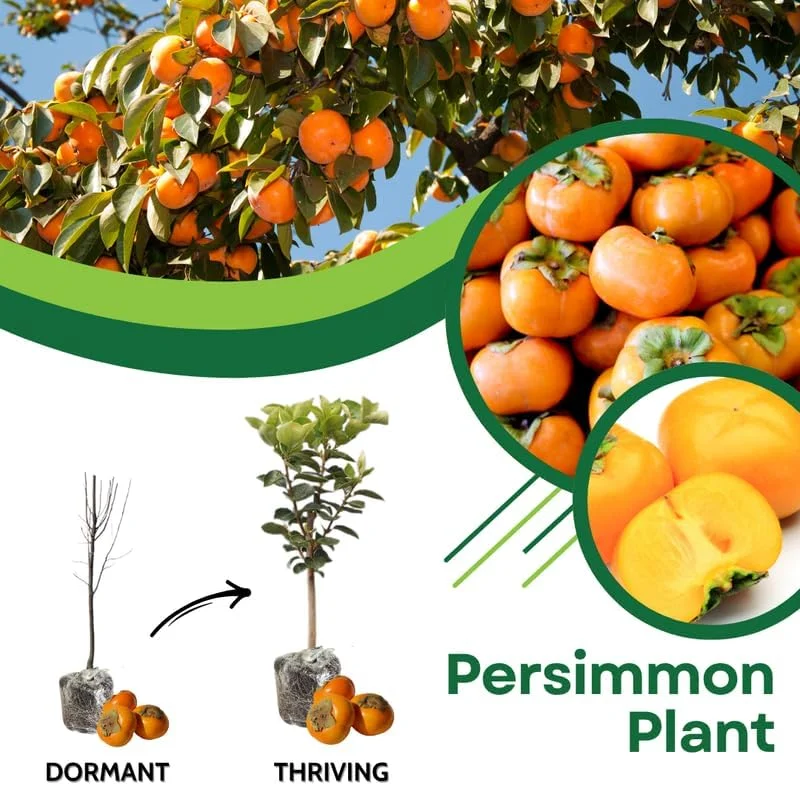
This offering is for one persimmon tree live plant, which stands approximately 6 to 12 inches tall from the top of the soil. It is shipped in a quart-sized nursery pot, providing a robust root system for successful transplanting. At the time of shipping, especially during the cooler months, the plant will likely be dormant, meaning it may have no leaves or appear to be a bare stick. This is a normal and healthy state for a deciduous tree and is optimal for transplanting, as it reduces shock. The tree is suitable for outdoor cultivation and is hardy in USDA Zones 7-10. Expected growth rate varies, but young trees can add 1-2 feet of height per year under ideal conditions. Fruit production typically begins within 3-5 years after planting, with full maturity reached over several more years.
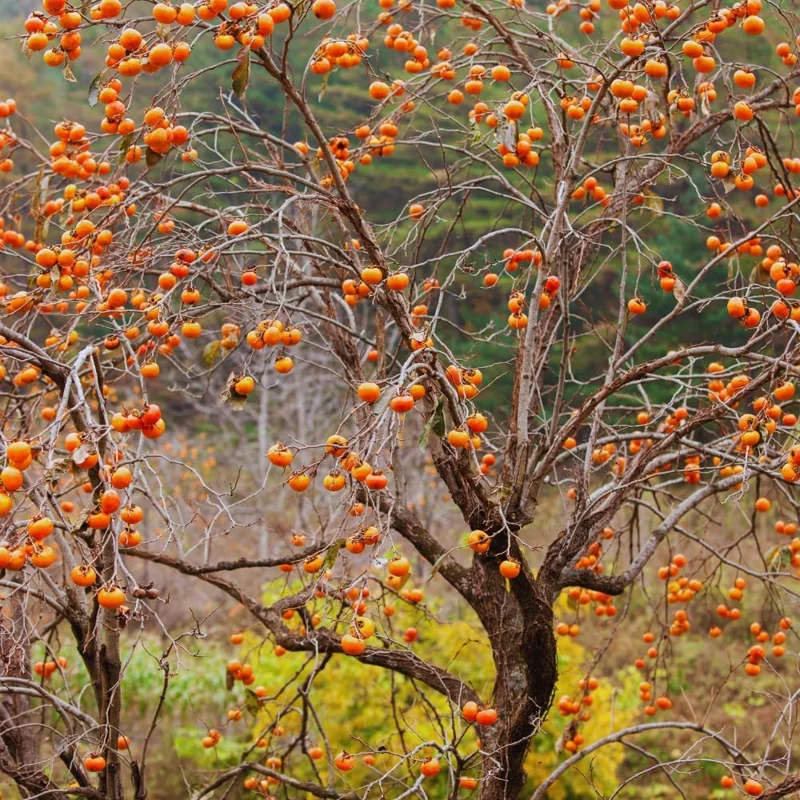
The mature size of an American persimmon tree can range from 30-60 feet tall and 20-35 feet wide, depending on variety and growing conditions. It develops a rounded canopy, providing excellent shade. This young plant provides an excellent foundation for establishing a long-lived fruit tree in your garden. Understanding the characteristics of your persimmon tree live plant, including its dormant state and size, will help you prepare for its successful integration into your landscape.
Frequently Asked Questions
- Q: How big is the persimmon tree live plant when it arrives? A: The persimmon tree live plant you will receive is approximately 6 to 12 inches tall and comes in a quart-sized nursery pot, ready for planting. Its compact size makes it easy to handle and transplant.
- Q: Is this an indoor or outdoor plant? A: This American persimmon tree is intended for outdoor planting. It requires ample sunlight and space to grow into a mature fruit-bearing tree. It is hardy in USDA Zones 7-10.
- Q: What condition will the plant be in during winter? A: During winter, the plant will be dormant. This means it will have no leaves, which is a natural and healthy state for deciduous trees and ideal for reducing transplant shock. Don’t worry, it will leaf out in spring.
- Q: How much sunlight does a persimmon tree need? A: For optimal growth and fruit production, a persimmon tree live plant requires at least 6-8 hours of direct sunlight per day, ideally full sun exposure.
- Q: Is this plant easy to care for? A: Yes, persimmon trees are generally considered easy to care for once established. They are relatively low-maintenance, tolerant of various soil types, and once mature, can withstand periods of drought.
- Q: When is the best time to plant this persimmon tree? A: The best time to plant your persimmon tree live plant is in the spring after the last frost, or in early fall. This allows the tree to establish its root system before extreme temperatures.
- Q: What is the expected growth rate for this tree? A: Young persimmon trees can grow 1-2 feet per year under good growing conditions. Fruit production typically starts within 3-5 years.
- Q: What are the USDA hardiness zones for this persimmon tree? A: This persimmon tree is suitable for planting in USDA Hardiness Zones 7-10, meaning it can tolerate a range of winter temperatures.
- Q: What kind of soil is best for growing persimmon tree? A: Persimmon trees prefer well-draining soil with a slightly acidic to neutral pH (6.0-7.0). They can tolerate a variety of soil types, including sandy or clayey soils, as long as drainage is good.
- Q: Will I get fruit from this tree? A: Yes, with proper persimmon tree care and sufficient time, your tree will produce delicious persimmon fruit. Fruit production usually begins a few years after planting.
Be the first to review “Persimmon Tree Live Plant – 6-12 Inches Tall, Quart Pot, Outdoor, Zones 7-10”
You must be logged in to post a review.
People also Viewed
Sold 50 products
Original price was: $17.58.$11.86Current price is: $11.86.
Sold 50 products
Price range: $32.99 through $35.99
Sold 50 products
$69.99
Sold 50 products
$18.99
Sold 50 products
Price range: $14.98 through $23.89
Sold 50 products
$32.99
Sold 50 products
$24.99
Sold 50 products
Price range: $43.99 through $44.99RELATED posts
Frostproof Jasmine Care: 7 Tips for Successful Pot Growth
Most gardenias are known for being “divas.” They want perfect humidity, perfect soil, and they [...]
Mar
Top 7 Best Smelling Jasmine Varieties for a Heavenly Garden
Have you ever walked past a house and caught a scent so sweet you just [...]
Mar
Master the Heat: 8 Expert Tips for Growing Jalapeños Like a Pro
Are you staring at your garden space, wondering why your pepper plants look more like [...]
Mar
Top 5 Must-Have Hoya Varieties for Beginners
Hoyas are easily one of my top recommendations if you’re hunting for a low-maintenance houseplant [...]
Mar
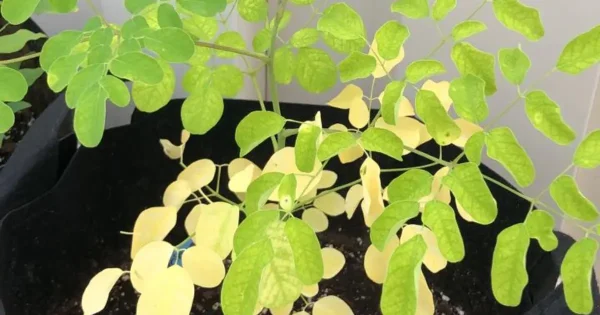
7 Moringa Plant Care Mistakes to Avoid for Healthy Growth
Have you ever looked at your Moringa tree and wondered why its once vibrant green [...]
Feb
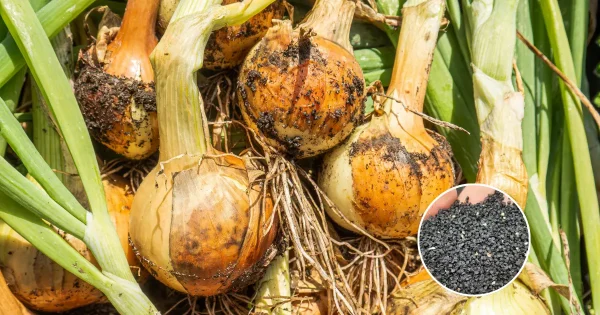
How to Grow Potato Onions From True Seeds: A Step-by-Step Guide
Have you ever wondered how to grow potato onions from true seeds or why some [...]
Feb
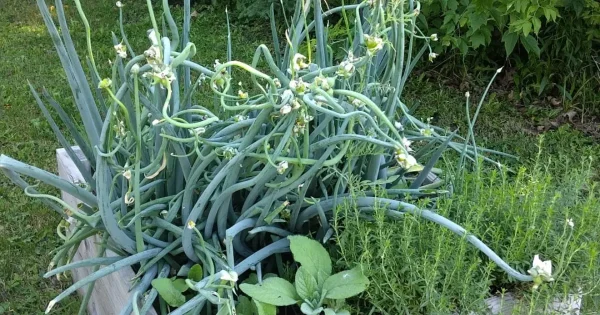
Growing Walking Onions in Containers: The Ultimate Guide
Have you ever looked at your small balcony or cramped patio and wished you could [...]
Feb

9 Best Flower Seeds to Start in February for Early Blooms
If you’re a passionate gardener, you know that itchy feeling in your fingers when February [...]
Jan

Reviews
There are no reviews yet.