
Gardening Tips
7 Moringa Plant Care Mistakes to Avoid for Healthy Growth
Feb
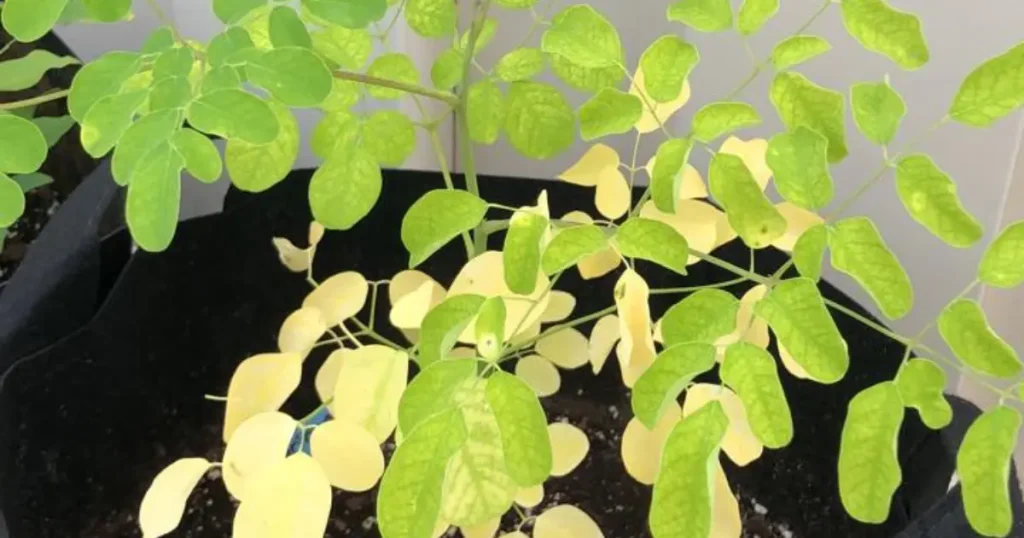
Have you ever looked at your Moringa tree and wondered why its once vibrant green leaves are turning a sickly pale yellow? Or maybe you started with high hopes for a backyard superfood forest, only to find your “Miracle Tree” looking more like a dry stick in the mud?
If you are feeling frustrated, you are not alone. Many gardeners, from the sunny patches of Florida to the dry heat of Arizona, struggle with Moringa oleifera. While it is famous for being a drought-tolerant, fast-growing powerhouse, it has a few specific “deal-breakers” that can kill it faster than you can say “drumstick tree.”
I have spent years experimenting with organic gardening and helping home gardeners turn their brown thumbs green. I have seen these same seven mistakes happen over and over again. Let’s walk through them together so you can stop stressing and start harvesting those nutrient-dense leaves.
1. Overwatering Moringa Plant
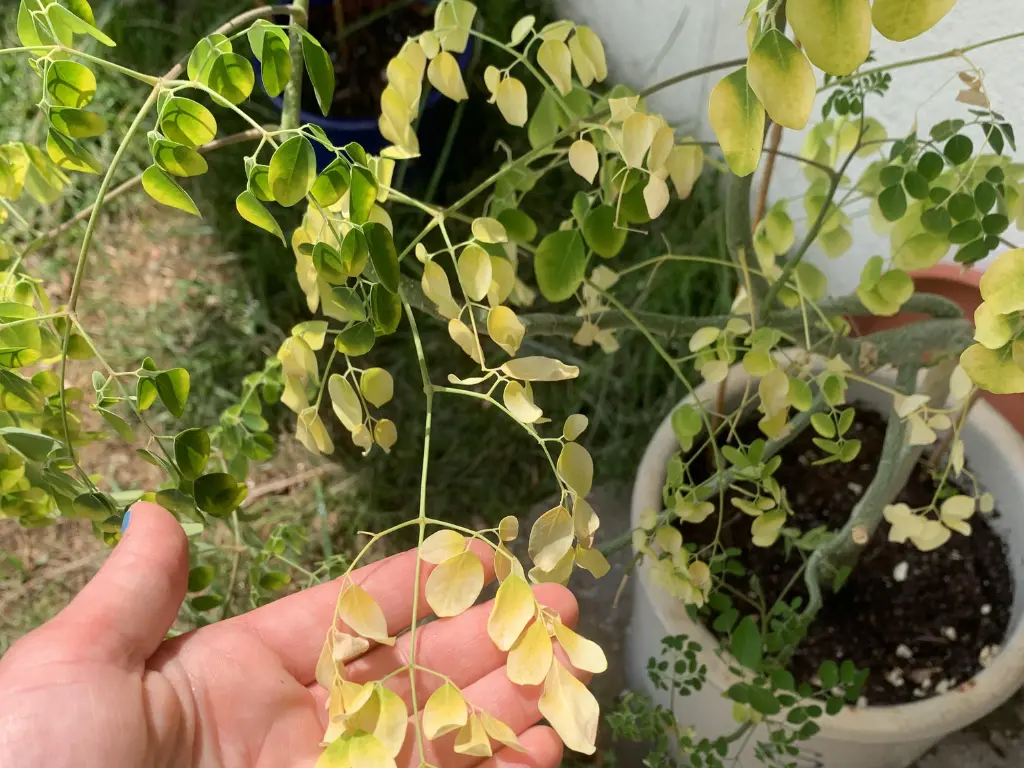
The number one killer of Moringa plants in American backyards is actually kindness. Or rather, too much of it in the form of water.
Moringa is native to arid and semi-arid climates. It has a large, tuberous taproot designed to store water for the long haul. When you keep the soil constantly wet, the taproot cannot breathe. This leads to root rot, a fungal condition that turns the roots into mush.
I remember a friend in Houston who watered her Moringa every single day during a humid summer. Within two weeks, the tree dropped every leaf. We dug it up, and the roots smelled like compost.
How to fix it: Use the “finger test.” Stick your finger two inches into the soil. If it feels damp, put the watering can away. Only water when the top layers are bone dry.
2. Planting in Heavy, Compressed Soil
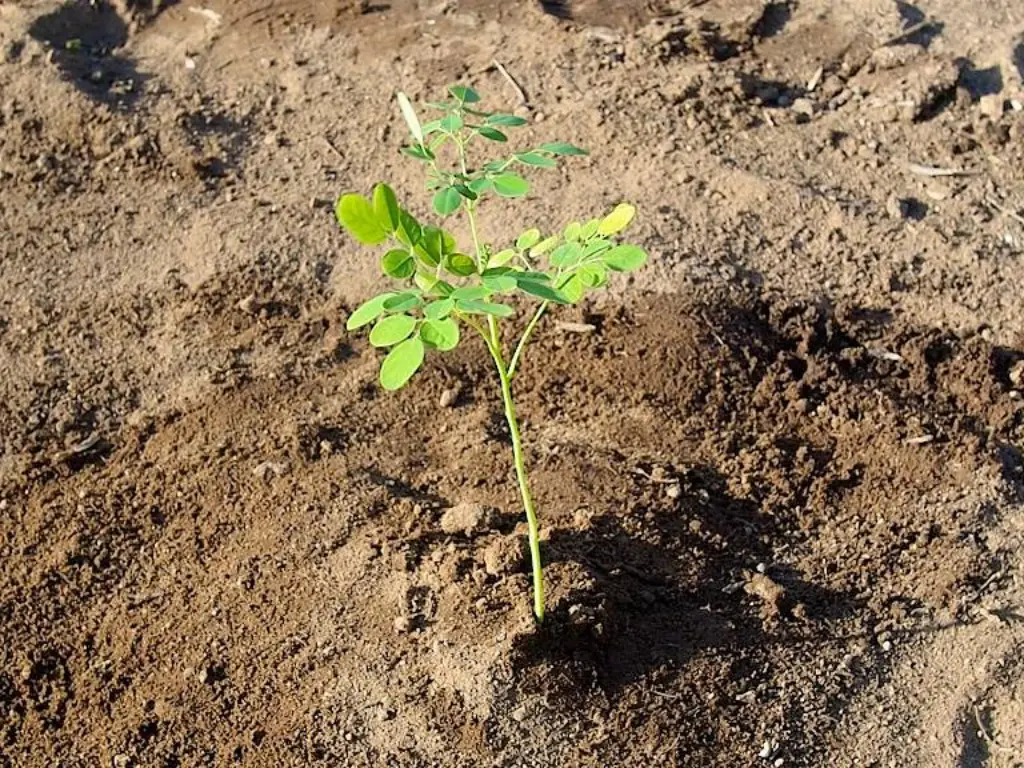
If you are trying to grow Moringa in the heavy clay soil common in parts of Georgia or the Midwest, you are fighting an uphill battle. Moringa needs “feet” that stay dry.
In its natural habitat, this tree grows in sandy, loose earth. Heavy soil traps moisture around the root zone, leading back to that dreaded root rot. Furthermore, compacted soil prevents the taproot from diving deep into the earth to find minerals.
Pro-tip: If your backyard soil is like bricks, do not just dig a hole. Build a raised bed or use a high-quality potting mix with added perlite or coarse sand. Think “cactus mix” rather than “wetland mix.”
3. Starving the Tree of Sunlight
Moringa plant is essentially a solar-powered machine. To produce those high levels of Vitamin C and protein, it needs intense photosynthesis.
A common mistake is planting the tree under the canopy of a larger oak or near a north-facing wall, where it only gets filtered light. In places like the Pacific Northwest, where the sun is shy, this is even more critical. A shaded Moringa will become “leggy”—it will grow tall and skinny as it reaches for light, but it won’t produce many leaves.
Your tree needs at least 6 hours of direct, blazing sunlight. If you are growing Moringa indoors during the winter, a standard window isn’t enough. You will likely need a high-output LED grow light to keep it happy.
4. Fear of Pruning (The “Let It Grow” Mistake)
It feels counterintuitive to cut down a tree you just planted, right? But with Moringa, the “Topping” method is your best friend.
Left to its own devices, a Moringa tree will shoot straight up like a telephone pole, putting all its energy into a single trunk. Before you know it, all the delicious leaves are 20 feet in the air where you can’t reach them.
When your tree reaches about 3 feet in height, pinch off the top. This forces the plant to grow side branches, creating a bushy, lush shape. More branches equal more leaves. Don’t be shy; Moringa is incredibly resilient to pruning. In fact, the more you harvest, the more it grows.
5. Ignoring Your USDA Hardiness Zone
Moringa is a tropical soul. It thrives in USDA Zones 9 through 11. If you live in a place where the ground freezes, like Chicago or Denver, your Moringa will not survive the winter outdoors.
I see many people plant their Moringa in the ground in Zone 7 and act surprised when it doesn’t come back in the spring.
The Solution: Treat Moringa as an annual if you live in the North, or grow it in a large pot. When the temperature drops below 40 degrees Fahrenheit, bring it inside or into a greenhouse. If it’s in the ground and a light frost is coming, mulch the base heavily to protect the root ball.
6. Using High-Chemical Synthetic Fertilizers
While the Moringa plant grows fast, it doesn’t need a heavy dose of synthetic chemicals. Over-fertilizing with high-phosphorus “bloom boosters” can actually hurt the delicate balance of the soil.
Moringa loves nitrogen, but it prefers it from organic sources. Think of it like a professional athlete: it needs “clean fuel” to perform.
Instead of store-bought chemical spikes, try top-dressing your soil with aged compost or worm castings. If you must use a liquid fertilizer, opt for a diluted fish emulsion or seaweed extract. This provides the micro-nutrients the tree needs without the salt buildup that burns the roots.
7. Planting Seeds Too Deep
Moringa seeds are relatively large, but they don’t need to be buried deep in the earth. If you plant them three inches down, the seedling might run out of energy before it ever breaks the surface.
The “rule of thumb” here is literally a thumb. Plant the seeds about half an inch to one inch deep. Ensure the “wings” on the seed are intact if possible, as they help with water absorption. Keep the soil moist (but not soaked!) until you see that first green loop emerge from the dirt.
Frequently Asked Questions (FAQs)
Why are my Moringa leaves turning yellow?
Usually, this is a sign of either overwatering or a nitrogen deficiency. Check the soil moisture first. If it is dry, try adding some organic compost or a nitrogen-rich organic fertilizer.
Can I grow Moringa plants in a pot permanently?
Yes! Moringa does very well in large containers (at least 15 to 20 gallons). Just ensure the pot has excellent drainage holes and you prune it regularly to keep it at a manageable size.
How often should I harvest the leaves?
Once the tree is about 3 or 4 feet tall and well-established, you can harvest leaves every few weeks. Just never strip more than 30 percent of the foliage at one time, so the tree can still recover.
Is it normal for Moringa to lose leaves in the winter?
Yes. In many parts of the US, Moringa acts as a deciduous tree, dropping its leaves as the days get shorter and colder. As long as the trunk and roots are healthy, it will sprout back once the heat returns.
Conclusions
Now that you know what to avoid, it is time to take a look at your own garden. Walk out to your Moringa today and check the soil. Is it too wet? Is there enough sun hitting those leaves?
Growing your own “Miracle Tree” is one of the most rewarding things a gardener can do. Not only do you get a beautiful plant, but you also get a continuous supply of one of the most nutrient-dense foods on the planet.
You may like: